

Laing Bicol
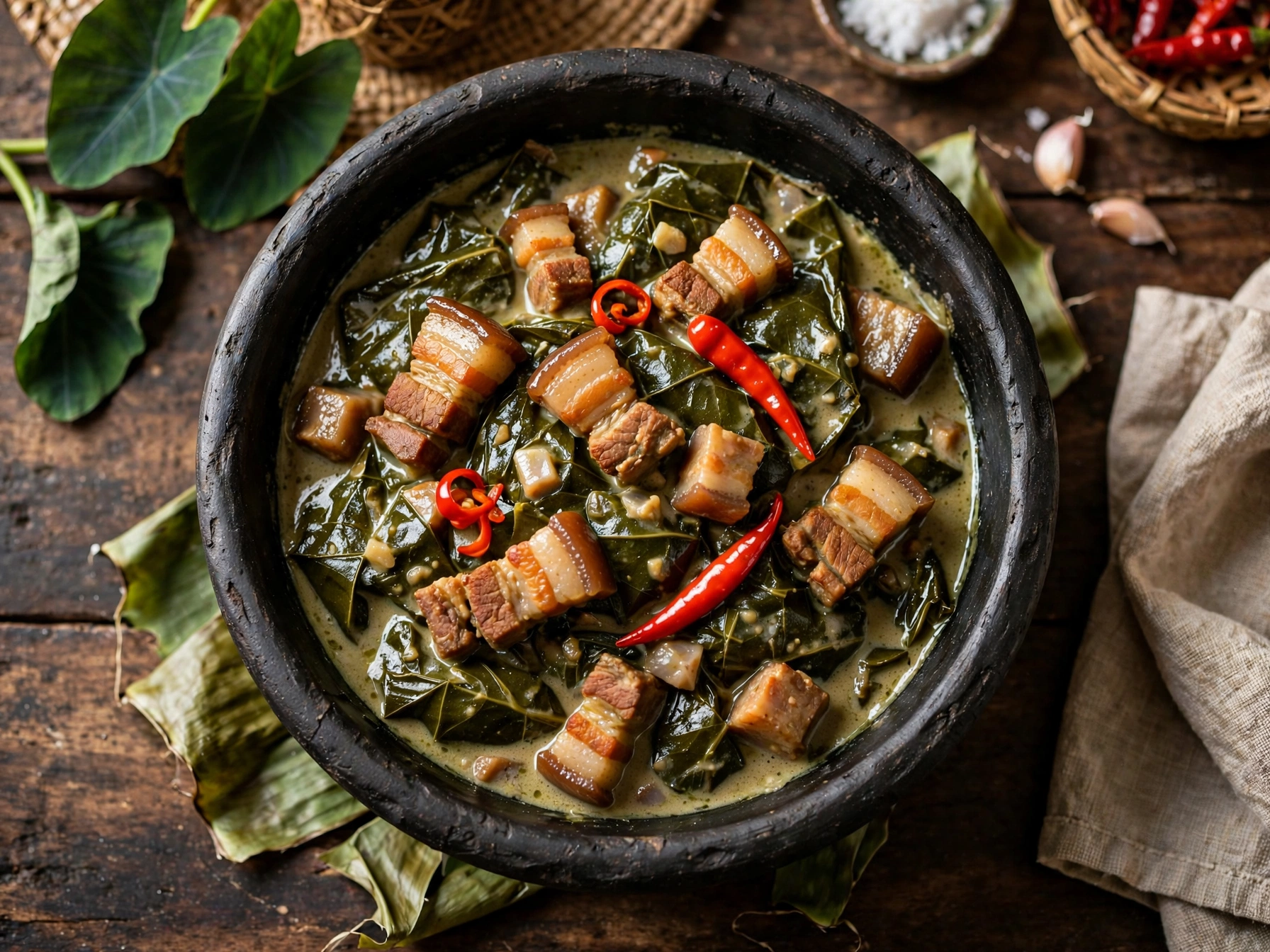
Laing, or Pinangat in Bicol, is Bicol's pride - dried or fresh taro leaves slow-cooked in coconut milk with bagoong, ginger and labuyo. Creamy, gingery, and nagmamantika, it's the ultimate gata dish that gets better the next day.

Laing, or Pinangat in Bicol, is Bicol's pride - dried or fresh taro leaves slow-cooked in coconut milk with bagoong, ginger and labuyo. Creamy, gingery, and nagmamantika, it's the ultimate gata dish that gets better the next day.
Ingredients
-
100 g
-
400 ml
-
400 ml
-
250 g
-
3 tbsp
-
1 thumb
-
1 medium
-
4 cloves
-
10-15 pcs
-
3 pcs
-
to taste
1. Prep ingredients
2. Render pork and aromatics
3. Add gata and gabi - DO NOT STIR
Do not stir while leaves soften to avoid throat irritation (makati).
4. Add kakang gata and chilies
Simmer until oil separates from coconut cream (nagmamantika).
5. Serve
All Steps Completed!
You've successfully finished cooking this recipe.
Directions
Step 1: Prep ingredients
Shake off dust from dried gabi leaves, do not wash heavily if pre-cleaned. Slice pork belly, julienne ginger, slice onion and mince garlic. Split coconut milk into thin and thick portions.
Step 2: Render pork and aromatics
In a palayok or wok, add pork with 1/4 cup water and let fat render until golden. Add ginger, garlic, onion and saute 2 minutes until aromatic.
Step 3: Add gata and gabi - DO NOT STIR
Pour thin coconut milk (second press) and bagoong alamang, bring to gentle boil. Lay dried leaves on top, press lightly but DO NOT STIR. Cover, low heat, simmer undisturbed 25-30 minutes to avoid makati/itchy feeling.
Do not stir while leaves soften to avoid throat irritation (makati).
Step 4: Add kakang gata and chilies
Gently fold leaves once soft. Add thick coconut cream (kakang gata) and whole chilies. Do not boil hard, just simmer 10 minutes until nagmamantika - oily cream separates on top. Season with pepper and patis.
Simmer until oil separates from coconut cream (nagmamantika).
Step 5: Serve
Serve hot with mainit na kanin and pritong isda. Best when sauce is creamy and leaves are fully tender.
Credit & Sources
This recipe is curated from the credited creator or publisher and presented on Recipinboard with additional editorial context and features to make discovering, saving, organizing, and cooking easier—with interactive cooking tools, ingredient checklists, serving adjustments, meal planning, and grocery planning. We recognize and credit the recipe source while adding our own editorial perspective to help you discover more about the recipe and its story.
What's Your Reaction?

The team behind reviewing, curating, and preparing community-submitted recipes and food content for publication on Recipinboard. We help ensure every submission is presented clearly, credited properly, and ready to be discovered by fellow food lovers.
Related Recipes
 Filipino Breakfast
⏱ 17 mins
Filipino Breakfast
⏱ 17 mins
Chicken Inasal with Garlic Java Rice & Atchara
There are two kinds of grilled chicken in the Philippines. There's the one you eat...
 Asian Salads
⏱ 45 mins
Asian Salads
⏱ 45 mins
Kimchi — Easy Mak-Kimchi Style
If you have ever been intimidated by the complex process of making traditional Kor...
 Donuts, Churros & Fritters
⏱ 60 mins
Donuts, Churros & Fritters
⏱ 60 mins
Custard Cream Donuts — Classic Vanilla & Chocolate
Warm, soft, and bursting with rich, silky cream—there’s a reason custard donuts ar...
 Cakes & Layer Cakes
⏱ 43 mins
Cakes & Layer Cakes
⏱ 43 mins
Strawberry Swiss Roll: A Pillowy Pink Dream
A bakery-worthy centerpiece featuring a pastel-pink, cloud-soft chiffon sponge rol...
 Dinner Rolls & Buns
⏱ 50 mins
Dinner Rolls & Buns
⏱ 50 mins
Golden Cheesy Garlic Swirl Rolls (Bakery-Style Pull-Apart Bread)
Cloud-soft enriched milk dough swirled with fragrant garlic herb butter, layered w...
 Cookies & Shortbread
⏱ 40 mins
Cookies & Shortbread
⏱ 40 mins
NYC-Style Chunky Chocolate Chip Cookies (Classic, Red Velvet &...
Massive, gourmet Levain-style cookies featuring one master dough transformed into ...





Comments (0)