

Creamy Garlic Chicken Pasta
Juicy, golden pan-seared chicken cutlets meet al dente penne pasta bathed in a silky, restaurant-grade garlic parmesan cream sauce, accented with tender baby spinach and sweet sun-dried tomatoes.


Few dinners evoke the warmth and soulful satisfaction of a hearty trattoria meal quite like a steaming bowl of creamy garlic chicken pasta. Succulent, golden-crusted chicken cutlets—seasoned with aromatic Italian herbs and seared until deeply savory—mingle with perfectly al dente ridged penne coated in a velvety, garlic-infused Parmigiano-Reggiano cream sauce. Brightened with tender wilted baby spinach and sweet, tangy ribbons of sun-dried tomatoes, this restaurant-worthy dinner delivers pure culinary comfort that transforms simple weeknight cooking into a celebration.
The Heritage & Evolution of Italian-American Creamy Pastas
In classical Italian gastronomy, poultry and pasta rarely share the same plate. Traditional Italian menus honor a strict course separation, presenting pasta as the primo (first course) and roasted or braised meats as the secondo (second course), with dairy creams used with great restraint.
The marriage of golden-seared chicken cutlets and rich, garlic-laden cream sauces represents a quintessential triumph of Italian-American culinary heritage. Mid-20th-century immigrant families and neighborhood trattorias throughout New York, Boston, and Providence adapted Old World pasta techniques to the abundant poultry and dairy of the American market. By searing seasoned chicken cutlets directly in the pan and deglazing the caramelized pan fond into a velvety garlic and Parmigiano-Reggiano reduction, cooks created an enduring comfort classic that now commands menus worldwide.
What Makes This Dish Special
The magic of this recipe lies in one-pan flavor layering. Instead of boiling chicken or tossing pasta in heavy jarred sauce, we sear seasoned chicken cutlets in butter and olive oil to build a deeply savory caramelized fond on the bottom of the skillet. Deglazing those browned drippings with a splash of white wine and blooming fresh garlic creates an extraordinarily rich sauce foundation. Finished with freshly grated aged Parmigiano-Reggiano and starchy pasta cooking water, the sauce coats every noodle in a glossy, clinging emulsion that never separates or turns greasy.
Component & Flavor Architecture
| Component | Key Elements | Culinary Role & Texture Profile |
|---|---|---|
| Golden Seared Chicken | Butterflied chicken breasts, Italian herbs, smoked paprika, butter & EVOO | High-heat searing creates a golden, savory crust while keeping the interior juicy; pan drippings (fond) supply foundational umami for the sauce. |
| Al Dente Pasta | Penne rigate or rigatoni, salted boiling water | Ridged exterior channels trap and cling to the rich cream sauce, providing a firm, toothsome chew that anchors the dish. |
| Velvety Garlic Cream Sauce | Minced fresh garlic, dry white wine, heavy cream, Parmigiano-Reggiano, starchy pasta water | Silky emulsion created through starchy pasta water and melted cheese; bloomed garlic infuses mellow sweetness without harsh pungency. |
| Fresh Accents | Baby spinach, oil-packed sun-dried tomatoes, Italian flat-leaf parsley | Vibrant green spinach provides fresh vegetal contrast, while sun-dried tomatoes add concentrated sweetness and lively acidity to cut rich dairy. |
Critical Technique: Starchy Pasta Water & Cheese Emulsion
Never dump all your pasta water down the drain: Before draining your pasta, ladle out at least 1 cup of cloudy, starchy cooking water. Adding 1/4 to 1/2 cup of hot pasta water into the simmering cream sauce binds the dairy fats and melted Parmigiano-Reggiano into a glossy, restaurant-caliber emulsion. Furthermore, always remove the skillet from high heat before stirring in the grated cheese; excessive direct boiling can cause dairy proteins to seize, resulting in a grainy, broken sauce.
Pro Tips & Trattoria Insights
- 1. Butterfly for Even Cooking: Halve chicken breasts horizontally into cutlets of uniform 1/2-inch thickness. Thin cutlets cook rapidly in 3–4 minutes per side, developing a handsome golden sear before drying out.
- 2. Grate Cheese from the Block: Pre-shredded tub cheese contains cellulose anti-caking powders that inhibit smooth melting and create gritty sauces. Use freshly microplaned Parmigiano-Reggiano or Grana Padano.
- 3. Bloom the Garlic Gently: Cook the minced garlic over medium-low heat for just 45–60 seconds until fragrant and pale golden. Burnt garlic imparts an unpleasantly bitter taste to delicate cream sauces.
- 4. Rest Chicken Before Slicing: Allow seared chicken breasts to rest on a clean cutting board for 5 minutes before carving. Slicing immediately allows precious interior juices to escape onto the board rather than into the dish.
- 5. Reheating Leftovers: If enjoying the next day, reheat gently over low heat with a splash of milk, cream, or chicken broth. The starches in the pasta continue absorbing liquid in the fridge, so a touch of liquid restores its silky coating.
Serving, Beverage Pairings & Accompaniments
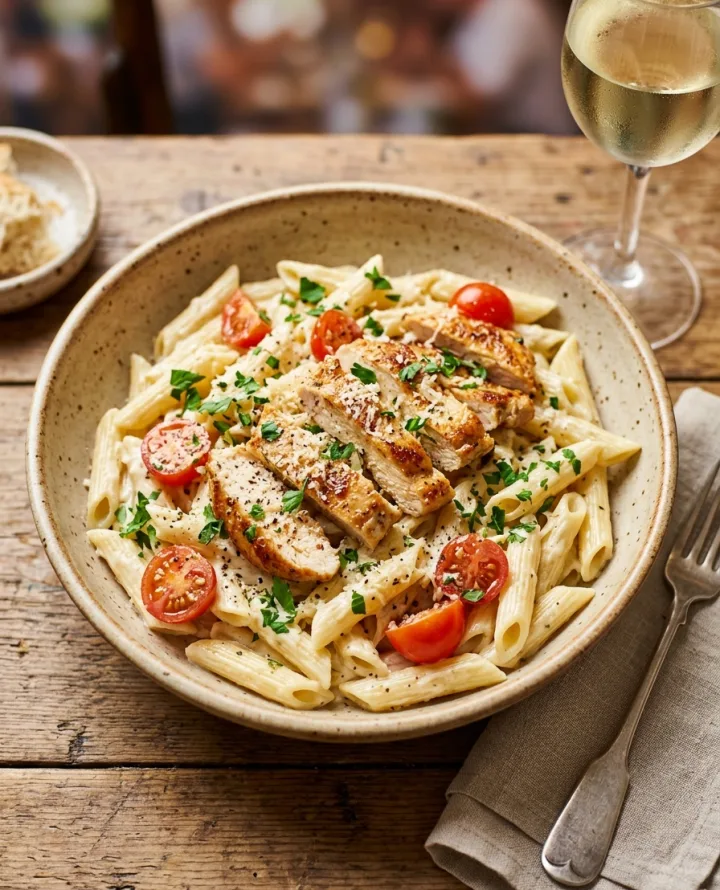
Transfer the sauced pasta into wide, warmed pasta bowls. Arrange the sliced golden chicken cutlets on top, and shower with extra microplaned Parmigiano-Reggiano and freshly chopped Italian flat-leaf parsley. Serve immediately with warm, crusty garlic bread or toasted ciabatta to mop up the luxurious pan sauce.
Wine Pairings: The rich dairy and savory chicken fond pair sublimely with a crisp, high-acidity Italian white wine such as Pinot Grigio, Soave Classico, or a lightly oaked Chardonnay. For red wine enthusiasts, a light-to-medium-bodied Chianti Classico or Pinot Noir offers bright cherry acidity that cleanses the palate beautifully.
Ingredients
-
500 gSubstitutes for Chicken Breast:Chicken Thighs Ratio: 1:1Turkey Breast Ratio: 1:1Tofu (Firm) Ratio: 1:1 (Vegan swap)
-
1 tsp
-
1/2 tspSubstitutes for Garlic:Garlic Powder Ratio: 1/8 tsp powder = 1 cloveShallots Ratio: 1:1
-
1/2 tspSubstitutes for Smoked Paprika:Chili Powder Ratio: 1/2 tsp chili powder for 1 tsp paprika
-
1 tsp
-
1/2 tsp
-
1 tbspSubstitutes for Extra Virgin Olive Oil:Avocado Oil Ratio: 1:1
-
1 tbsp DairySubstitutes for Unsalted Butter:Salted Butter Ratio: 1:1 (omit 1/4 tsp salt per stick)Coconut Oil Ratio: 1:1 (Dairy-free)
-
340 g GlutenSubstitutes for Penne Pasta:Penne Rigate Ratio: 1:1Rigatoni Ratio: 1:1Ziti Ratio: 1:1
-
1 tbsp
-
1 cup GlutenSubstitutes for Spaghetti Pasta:Spaghettoni Ratio: 1:1Linguine Ratio: 1:1Bucatini Ratio: 1:1
-
6 clovesSubstitutes for Garlic:Garlic Powder Ratio: 1/8 tsp powder = 1 cloveShallots Ratio: 1:1
-
2 tbsp DairySubstitutes for Unsalted Butter:Salted Butter Ratio: 1:1 (omit 1/4 tsp salt per stick)Coconut Oil Ratio: 1:1 (Dairy-free)
-
1/4 cup SulfitesSubstitutes for Dry White Wine:Chicken broth + 1 tsp lemon juice Ratio: 1:1
-
300 ml DairySubstitutes for Heavy Cream:Full Fat Coconut Milk Ratio: 1:1 (Dairy-free)Milk + Butter Ratio: 3/4 cup milk + 1/4 cup melted butter = 1 cup heavy cream
-
75 g
-
1/4 tsp
-
60 gSubstitutes for Spinach:Kale Ratio: 1:1Swiss Chard Ratio: 1:1
-
50 gSubstitutes for Fresh Tomato:Canned Diced Tomatoes Ratio: 1:1
-
2 tbsp
-
1/2 tspSubstitutes for Fresh Lemon:Fresh Lime Ratio: 1:1White Wine Vinegar Ratio: 1/2 tsp vinegar = 1 tsp lemon juice
Watch How to Make It
1. Season and Sear the Chicken Cutlets
The Sear Rule: Resist moving the chicken cutlets during the first 3 minutes of cooking. This undisturbed contact allows the Maillard reaction to create a flavorful crust and leaves valuable fond on the skillet bottom.
2. Boil the Pasta to Al Dente & Reserve Cooking Water
Liquid Gold: Always ladle out pasta water before dumping the pot into a colander. The dissolved starches are essential to turning cream and cheese into a glossy, clingy emulsion.
3. Deglaze the Pan Fond & Bloom the Fresh Garlic
Gentle Blooming: Burnt garlic ruins a delicate cream sauce with sharp bitterness. Keep the heat gentle and stir constantly as soon as the minced garlic hits the melted butter.
4. Simmer Cream, Melt Parmigiano & Emulsify Sauce
Off-Heat Cheese Melt: High direct heat breaks cheese emulsions into oil and rubbery solids. Melting Parmigiano-Reggiano off direct heat ensures a velvety, restaurant-grade texture.
5. Toss Pasta, Fold Spinach & Slice Chicken
Rest and Slice: Resting the chicken allows muscle fibers to reabsorb hot juices so every slice remains tender and moist when plated atop the warm pasta.
All Steps Completed!
You've successfully finished cooking this recipe.
Directions
Step 1: Season and Sear the Chicken Cutlets
Butterfly the chicken breasts horizontally into four even cutlets. Pat dry thoroughly with paper towels. Season both sides evenly with Italian seasoning, garlic powder, smoked paprika, kosher salt, and cracked black pepper. Heat 1 tablespoon of olive oil and 1 tablespoon of butter in a large deep skillet over medium-high heat. Add the cutlets and sear undisturbed for 3–4 minutes per side until deep golden brown and cooked through to 165°F (74°C). Transfer the chicken to a cutting board to rest for 5 minutes, leaving the flavorful browned drippings (fond) in the skillet.
The Sear Rule: Resist moving the chicken cutlets during the first 3 minutes of cooking. This undisturbed contact allows the Maillard reaction to create a flavorful crust and leaves valuable fond on the skillet bottom.
Step 2: Boil the Pasta to Al Dente & Reserve Cooking Water
Bring a large pot of water to a rolling boil and season generously with 1 tablespoon of coarse salt. Add the penne rigate and cook according to package directions until 1 minute shy of al dente (firm to the bite, approx. 9–10 minutes). Before draining, carefully scoop out 1 full cup of the cloudy, starchy pasta cooking water and set aside. Drain the remaining pasta and set aside.
Liquid Gold: Always ladle out pasta water before dumping the pot into a colander. The dissolved starches are essential to turning cream and cheese into a glossy, clingy emulsion.
Step 3: Deglaze the Pan Fond & Bloom the Fresh Garlic
Lower the skillet heat to medium-low. Pour in 1/4 cup of dry white wine (or chicken broth) and use a wooden spoon to scrape up all the delicious browned chicken bits stuck to the bottom of the pan. Allow the wine to simmer and reduce by half (about 1–2 minutes). Add 2 tablespoons of butter and the minced garlic. Cook gently for 45–60 seconds until the garlic is fragrant and pale golden—do not let it brown.
Gentle Blooming: Burnt garlic ruins a delicate cream sauce with sharp bitterness. Keep the heat gentle and stir constantly as soon as the minced garlic hits the melted butter.
Step 4: Simmer Cream, Melt Parmigiano & Emulsify Sauce
Pour in the heavy cream and bring to a gentle simmer over medium-low heat for 2–3 minutes until slightly thickened. Reduce heat to low (or slide the pan off direct heat). Add 1/4 cup of the reserved warm pasta water and gradually whisk in the freshly grated Parmigiano-Reggiano cheese and a pinch of nutmeg. Whisk steadily until the cheese melts completely into a silky, lump-free emulsion. Taste and season with additional salt and black pepper as needed.
Off-Heat Cheese Melt: High direct heat breaks cheese emulsions into oil and rubbery solids. Melting Parmigiano-Reggiano off direct heat ensures a velvety, restaurant-grade texture.
Step 5: Toss Pasta, Fold Spinach & Slice Chicken
Add the drained penne, julienned sun-dried tomatoes, and fresh baby spinach directly into the skillet. Toss gently over low heat for 1–2 minutes until the spinach wilts and the pasta is thoroughly coated in the sauce, splashing in another 2–4 tablespoons of pasta water if needed for a glossy consistency. Slice the rested chicken cutlets diagonally into strips. Divide the pasta into warm bowls, fan the sliced chicken across the top, and garnish with fresh parsley and extra grated parmesan. Serve hot.
Rest and Slice: Resting the chicken allows muscle fibers to reabsorb hot juices so every slice remains tender and moist when plated atop the warm pasta.
What's Your Reaction?

The team behind reviewing, curating, and preparing community-submitted recipes and food content for publication on Recipinboard. We help ensure every submission is presented clearly, credited properly, and ready to be discovered by fellow food lovers.
Related Recipes
 Life Style
⏱ 60 mins
Life Style
⏱ 60 mins
Laing Bicol
Laing, or Pinangat in Bicol, is Bicol's pride - dried or fresh taro leaves slow-co...
 Filipino Breakfast
⏱ 17 mins
Filipino Breakfast
⏱ 17 mins
Chicken Inasal with Garlic Java Rice & Atchara
There are two kinds of grilled chicken in the Philippines. There's the one you eat...
 Asian Salads
⏱ 45 mins
Asian Salads
⏱ 45 mins
Kimchi — Easy Mak-Kimchi Style
If you have ever been intimidated by the complex process of making traditional Kor...
 Donuts, Churros & Fritters
⏱ 60 mins
Donuts, Churros & Fritters
⏱ 60 mins
Custard Cream Donuts — Classic Vanilla & Chocolate
Warm, soft, and bursting with rich, silky cream—there’s a reason custard donuts ar...
 Cakes & Layer Cakes
⏱ 43 mins
Cakes & Layer Cakes
⏱ 43 mins
Strawberry Swiss Roll: A Pillowy Pink Dream
A bakery-worthy centerpiece featuring a pastel-pink, cloud-soft chiffon sponge rol...
 Dinner Rolls & Buns
⏱ 50 mins
Dinner Rolls & Buns
⏱ 50 mins
Golden Cheesy Garlic Swirl Rolls (Bakery-Style Pull-Apart Bread)
Cloud-soft enriched milk dough swirled with fragrant garlic herb butter, layered w...



Comments (0)