

Sinigang na Baboy sa Mangga
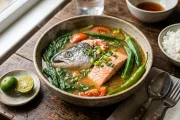
An inventive Filipino sour soup made with tender pork ribs and liempo simmered in an invigorating, tart green mango broth with kangkong and radish by Kru Nerry.
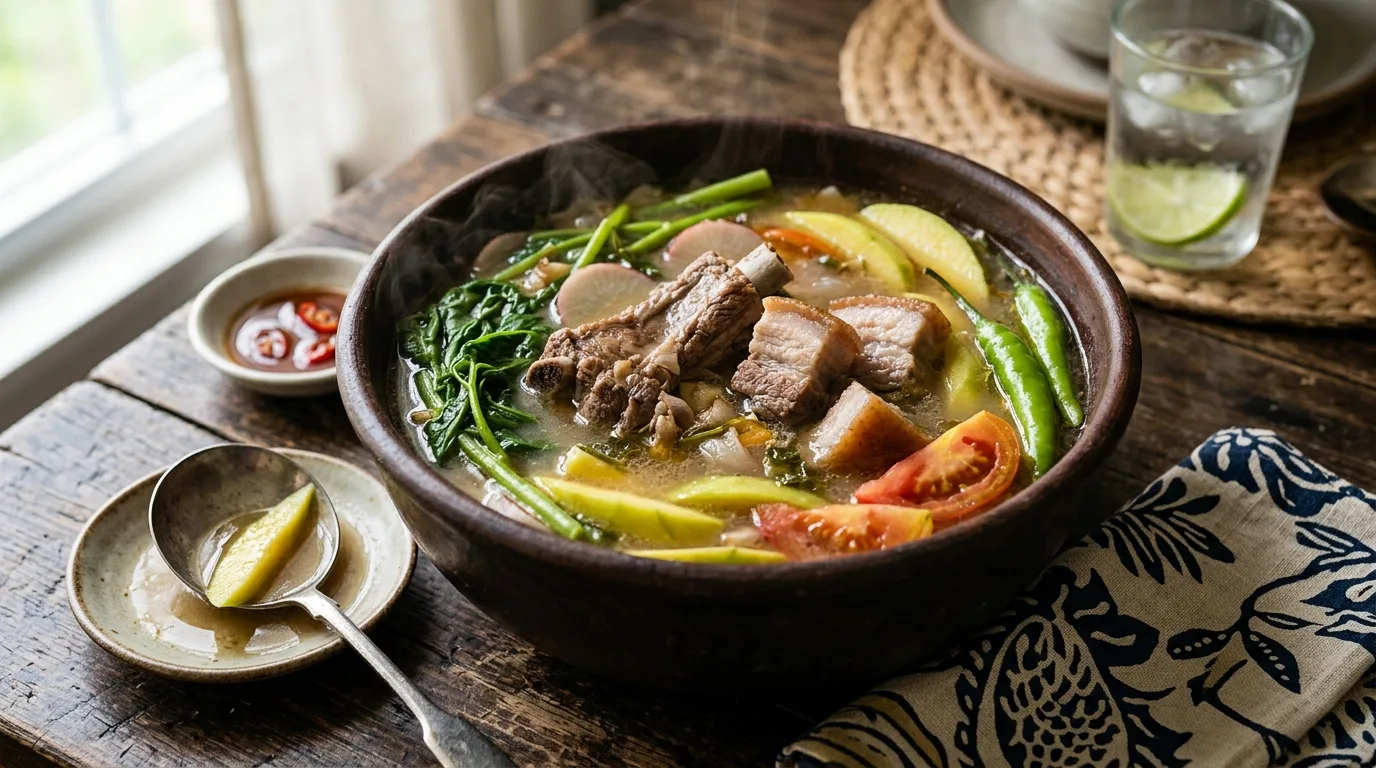
Craving an authentic homemade sinigang but have no fresh sampalok (tamarind) around? Sinigang na Baboy sa Mangga is an ingenious, mouthwatering Filipino regional sour soup where tart green mangoes provide the signature mouthwatering tang!
Showcased by Kru Nerry, this recipe relies on boiling and mashing unripe, crisp green mangoes into the broth. The natural fruit acidity pairs impeccably with succulent, pressure-cooked pork ribs and pork belly (liempo), creating a soup that is vibrant, fragrant, and deeply comforting.
Pro Tips for Perfect Pork Mango Sinigang
- Mash the Mango Pulp Thoroughly: Mashing the boiled green mango directly in some cooking water releases maximum fruit acidity and naturally thickens the broth body.
- Pork Ribs vs. Liempo: Using a combination of bone-in pork ribs and succulent pork belly gives you both deep bone marrow broth flavor and melt-in-your-mouth bites of pork.
- Control the Tanginess: You can start by adding three-quarters of the mashed mango liquid, then taste before adding the rest to achieve your preferred level of tartness.
Ingredients
-
1
-
3
-
6 to 8
-
5Substitutes for Fresh Tomato:Canned Diced Tomatoes Ratio: 1:1
-
1Substitutes for Yellow Onion:White Onion Ratio: 1:1Red Onion Ratio: 1:1Shallots Ratio: 3 shallots = 1 medium onion
-
2 tbsp
-
1 bunch
-
1
-
4
Watch How to Make It
1. Boil and Mash the Green Mangoes
Using sour, firm green mangoes (such as carabao green mangoes) gives the soup an irresistibly crisp, fruity acidity that rivals fresh tamarind.
2. Pressure Cook the Pork
Pressure cooking tenderizes the pork ribs and melts the tomatoes directly into a rich, full-bodied broth in a fraction of stovetop time.
3. Combine Mango and Pork Broth
Taste the broth at this point to gauge the sourness; green mango adds a clean, refreshing tang without overpowering the pork essence.
4. Simmer Radish and Chilies
Thinly sliced radish softens quickly and absorbs the fruity sour notes.
5. Add Kangkong, Season and Enjoy
Residual heat cooks the water spinach leaves while keeping their emerald green vibrancy intact.
All Steps Completed!
You've successfully finished cooking this recipe.
Directions
Step 1: Boil and Mash the Green Mangoes
Peel and chop the green mangoes. Place them in a small pot of water and boil until tender and translucent. Once soft, mash thoroughly with a fork or potato masher to extract their vibrant, tart juices.
Using sour, firm green mangoes (such as carabao green mangoes) gives the soup an irresistibly crisp, fruity acidity that rivals fresh tamarind.
Step 2: Pressure Cook the Pork
In a pressure cooker, combine the pork ribs or liempo with water, quartered red tomatoes, and onions. Cook on high pressure for 20 to 30 minutes until the meat is succulent and fork-tender.
Pressure cooking tenderizes the pork ribs and melts the tomatoes directly into a rich, full-bodied broth in a fraction of stovetop time.
Step 3: Combine Mango and Pork Broth
Pour the mashed green mango pulp and its tangy liquid into the pot with the tender pork broth. Stir well to blend the fruit acidity into the savory pork soup.
Taste the broth at this point to gauge the sourness; green mango adds a clean, refreshing tang without overpowering the pork essence.
Step 4: Simmer Radish and Chilies
Add the sliced radish (labanos) and whole green chilies into the bubbling soup. Simmer for 5 minutes until the radish is tender.
Thinly sliced radish softens quickly and absorbs the fruity sour notes.
Step 5: Add Kangkong, Season and Enjoy
Add the fresh kangkong leaves and tender stems. Season with fish sauce (patis) to taste, stir, and immediately turn off the heat. Let stand for 2 minutes to gently wilt the greens. Serve piping hot with steamed white rice!
Residual heat cooks the water spinach leaves while keeping their emerald green vibrancy intact.
What's Your Reaction?

I’m a passionate home cook who loves turning fresh ingredients into delicious, memorable meals. I curate recipes and share them on Recipinboard, bringing together inspiring dishes, flavors, and ideas for fellow food lovers. I believe great food brings people together, and I’m always exploring new recipes, techniques, and flavors to make every meal special.
Related Recipes
 Life Style
⏱ 60 mins
Life Style
⏱ 60 mins
Laing Bicol
Laing, or Pinangat in Bicol, is Bicol's pride - dried or fresh taro leaves slow-co...
 Filipino Breakfast
⏱ 17 mins
Filipino Breakfast
⏱ 17 mins
Chicken Inasal with Garlic Java Rice & Atchara
There are two kinds of grilled chicken in the Philippines. There's the one you eat...
 Asian Salads
⏱ 45 mins
Asian Salads
⏱ 45 mins
Kimchi — Easy Mak-Kimchi Style
If you have ever been intimidated by the complex process of making traditional Kor...
 Donuts, Churros & Fritters
⏱ 60 mins
Donuts, Churros & Fritters
⏱ 60 mins
Custard Cream Donuts — Classic Vanilla & Chocolate
Warm, soft, and bursting with rich, silky cream—there’s a reason custard donuts ar...
 Cakes & Layer Cakes
⏱ 43 mins
Cakes & Layer Cakes
⏱ 43 mins
Strawberry Swiss Roll: A Pillowy Pink Dream
A bakery-worthy centerpiece featuring a pastel-pink, cloud-soft chiffon sponge rol...
 Dinner Rolls & Buns
⏱ 50 mins
Dinner Rolls & Buns
⏱ 50 mins
Golden Cheesy Garlic Swirl Rolls (Bakery-Style Pull-Apart Bread)
Cloud-soft enriched milk dough swirled with fragrant garlic herb butter, layered w...



Comments (0)