

Sinigang na Baboy with Gabi
A classic Filipino sour tamarind soup made with tender pork belly, taro-thickened broth, kangkong, daikon radish, okra, and snake beans by Vanjo Merano (Panlasang Pinoy).
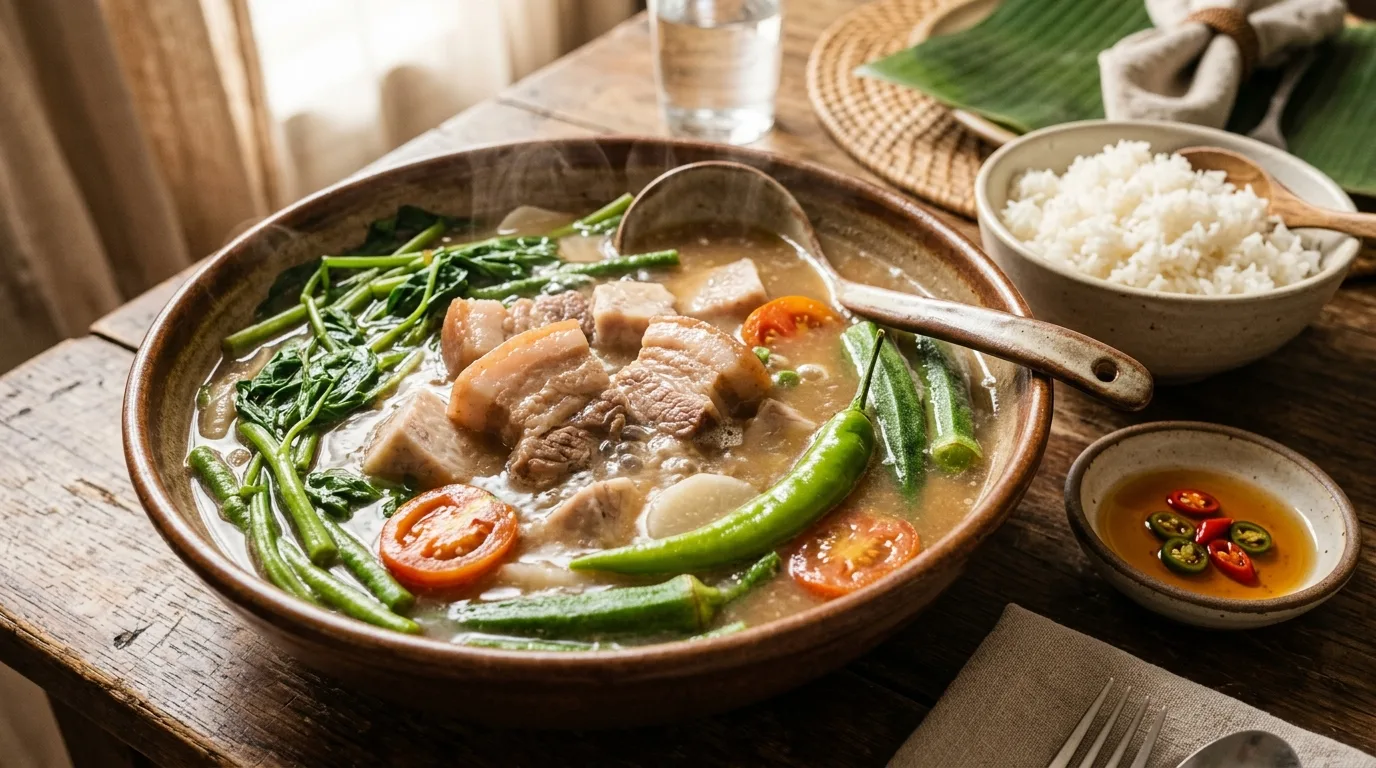

Sinigang na Baboy with Gabi is one of the most beloved comfort foods in the entire Filipino culinary canon. Cooked the signature Panlasang Pinoy way by chef and food creator Vanjo Merano, this iconic soup pairs succulent, tender pork belly with an appetizing array of vegetables—including fresh kangkong (water spinach), okra, daikon radish, and snake beans—simmered in an unmistakably tangy tamarind broth.
What sets this specific version apart is the addition of taro, locally known as gabi. As the peeled taro halves simmer alongside the pork, their rich natural starches gently break down and melt into the broth, lending the soup a luxurious, full-bodied viscosity that elevates the mouthfeel of every spoonful. Best enjoyed steaming hot with freshly cooked white rice and a side saucer of spicy fish sauce (patis with crushed siling labuyo), it is the quintessential taste of home.
Ingredients
-
2Substitutes for Pork Belly:Pork Shoulder Ratio: 1:1
-
2 piece
-
1 pieceSubstitutes for Yellow Onion:White Onion Ratio: 1:1Red Onion Ratio: 1:1Shallots Ratio: 3 shallots = 1 medium onion
-
2 pieceSubstitutes for Fresh Tomato:Canned Diced Tomatoes Ratio: 1:1
-
8 cup
-
3 tbsp
-
0.25 tsp
-
2
-
1 cup
-
15 piece
-
12 piece
-
3 piece
-
3 cup
Watch How to Make It
1. Boil water in cooking pot
Using a spacious 5- to 6-quart stockpot gives ample room for the pork, taro, and voluminous kangkong leaves to cook comfortably.
2. Add onions and tomatoes
Gently pressing the tomatoes against the side of the pot with a wooden spoon releases their savory-sweet juices into the broth.
3. Add pork belly and simmer
Skimming off the surface foam during the first few minutes yields a clean, crystal-clear soup base.
4. Add taro and simmer until tender
As the taro gently breaks down, its natural starches dissolve into the soup, imparting that signature velvety, full-bodied viscosity unique to Sinigang with Gabi.
5. Stir in sinigang mix, fish sauce, and pepper
Waiting until the meat and taro are tender before adding the tamarind mix ensures the meat fibers soften smoothly without being tightened by acidity.
6. Cook daikon radish
Slice the radish into uniform 1/4-inch rounds so they soften evenly without losing their refreshing bite.
7. Add green chilies, okra, and snake beans
Keeping the chili peppers whole perfumes the soup with rich capsicum aroma without making the broth excessively spicy.
8. Add kangkong, cover, and rest off the heat
Never boil kangkong violently; turning off the flame and letting it steam covered for 5 minutes prevents the leaves from darkening or turning soggy.
9. Ladle into serving bowl and serve with sawsawan
Spoon a little spicy fish sauce over the pork belly right before eating with hot rice for the quintessential Filipino dining experience!
All Steps Completed!
You've successfully finished cooking this recipe.
Directions
Step 1: Boil water in cooking pot
Pour 8 cups of water into a large, heavy-bottomed cooking pot. Place over high heat and bring to a rapid rolling boil.
Using a spacious 5- to 6-quart stockpot gives ample room for the pork, taro, and voluminous kangkong leaves to cook comfortably.
Step 2: Add onions and tomatoes
Add the quartered yellow onion and ripe quartered tomatoes into the boiling water. Lower the heat slightly to medium-high and boil for 5 to 8 minutes until the onions soften and tomatoes release their juices.
Gently pressing the tomatoes against the side of the pot with a wooden spoon releases their savory-sweet juices into the broth.
Step 3: Add pork belly and simmer
Carefully put the cubed pork belly into the pot. Bring the water back to a boil, skimming off any scum or foam that rises to the surface. Lower heat to medium, cover, and boil for 25 minutes.
Skimming off the surface foam during the first few minutes yields a clean, crystal-clear soup base.
Step 4: Add taro and simmer until tender
Add the peeled taro halves (gabi) into the pot with the pork. Cover tightly and continue to boil over medium-low heat for 30 minutes until the taro is fork-tender and the pork belly is meltingly soft.
As the taro gently breaks down, its natural starches dissolve into the soup, imparting that signature velvety, full-bodied viscosity unique to Sinigang with Gabi.
Step 5: Stir in sinigang mix, fish sauce, and pepper
Add the 2 packs (20g each) of Knorr Sinigang sa Sampaloc Mix Original, 3 tablespoons of fish sauce (patis), and 1/4 teaspoon of ground black pepper. Stir gently to dissolve the powder completely into the simmering broth.
Waiting until the meat and taro are tender before adding the tamarind mix ensures the meat fibers soften smoothly without being tightened by acidity.
Step 6: Cook daikon radish
Put the sliced daikon radish (labanos) into the pot. Cook for 3 to 5 minutes until the radish rounds turn tender-crisp and translucent.
Slice the radish into uniform 1/4-inch rounds so they soften evenly without losing their refreshing bite.
Step 7: Add green chilies, okra, and snake beans
Add the 3 long green chili peppers (siling pansigang), 15 whole okra pods, and the cut snake beans (sitaw). Cook over medium heat for 7 minutes until the vegetables are tender yet vibrant green.
Keeping the chili peppers whole perfumes the soup with rich capsicum aroma without making the broth excessively spicy.
Step 8: Add kangkong, cover, and rest off the heat
Add the fresh kangkong leaves on top of the simmering stew. Immediately cover the pot with its lid and turn off the heat. Let it stay covered for 5 minutes; the residual steam will gently wilt the tender greens while locking in their vibrant green color.
Never boil kangkong violently; turning off the flame and letting it steam covered for 5 minutes prevents the leaves from darkening or turning soggy.
Step 9: Ladle into serving bowl and serve with sawsawan
Transfer the hot Sinigang na Baboy with Gabi into a deep serving bowl with plenty of sour tamarind broth, tender pork belly chunks, taro, and vibrant vegetables. Serve hot with steamed white rice and a small condiment saucer of patis with spicy sliced chilies.
Spoon a little spicy fish sauce over the pork belly right before eating with hot rice for the quintessential Filipino dining experience!
What's Your Reaction?

I’m a passionate home cook who loves turning fresh ingredients into delicious, memorable meals. I curate recipes and share them on Recipinboard, bringing together inspiring dishes, flavors, and ideas for fellow food lovers. I believe great food brings people together, and I’m always exploring new recipes, techniques, and flavors to make every meal special.
Related Recipes
 Life Style
⏱ 60 mins
Life Style
⏱ 60 mins
Laing Bicol
Laing, or Pinangat in Bicol, is Bicol's pride - dried or fresh taro leaves slow-co...
 Filipino Breakfast
⏱ 17 mins
Filipino Breakfast
⏱ 17 mins
Chicken Inasal with Garlic Java Rice & Atchara
There are two kinds of grilled chicken in the Philippines. There's the one you eat...
 Asian Salads
⏱ 45 mins
Asian Salads
⏱ 45 mins
Kimchi — Easy Mak-Kimchi Style
If you have ever been intimidated by the complex process of making traditional Kor...
 Donuts, Churros & Fritters
⏱ 60 mins
Donuts, Churros & Fritters
⏱ 60 mins
Custard Cream Donuts — Classic Vanilla & Chocolate
Warm, soft, and bursting with rich, silky cream—there’s a reason custard donuts ar...
 Cakes & Layer Cakes
⏱ 43 mins
Cakes & Layer Cakes
⏱ 43 mins
Strawberry Swiss Roll: A Pillowy Pink Dream
A bakery-worthy centerpiece featuring a pastel-pink, cloud-soft chiffon sponge rol...
 Dinner Rolls & Buns
⏱ 50 mins
Dinner Rolls & Buns
⏱ 50 mins
Golden Cheesy Garlic Swirl Rolls (Bakery-Style Pull-Apart Bread)
Cloud-soft enriched milk dough swirled with fragrant garlic herb butter, layered w...








Comments (0)